
Stenoguru Typing Speed Test Course: Improve Your Typing Skills Efficiently
- Categories Blog
- Date February 14, 2025
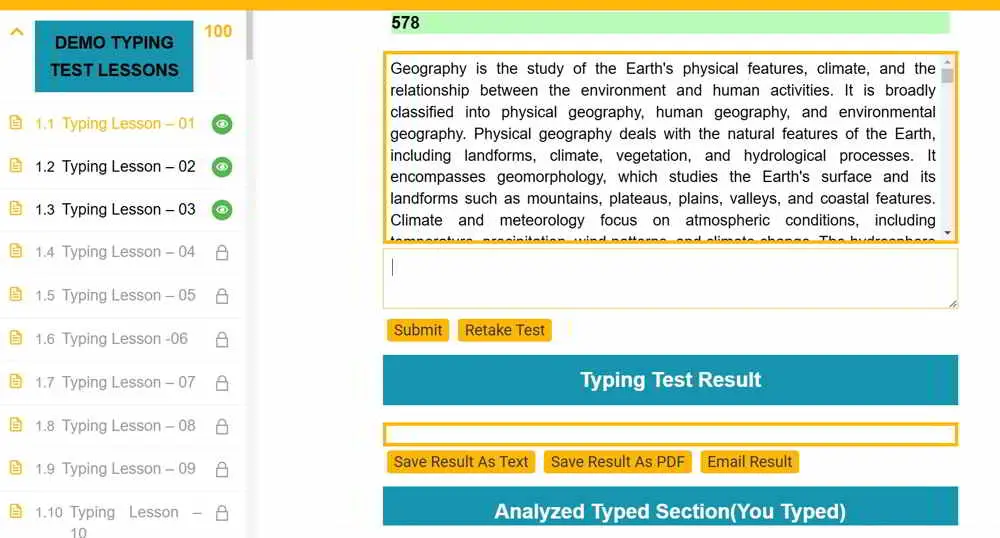
In today’s fast-paced digital world, typing speed and accuracy play a crucial role in productivity, especially for professionals preparing for competitive exams like SSC, IBPS, and other government jobs. The Stenoguru Typing Speed Test Course is designed to help users enhance their typing efficiency, improve accuracy, and track their progress with real-time metrics. Whether you are a beginner or an advanced typist, this comprehensive course will guide you to achieve your desired speed with structured lessons, practice sessions, and expert tips.
Why Choose Stenoguru Typing Speed Test Course?
Choosing the right typing course can significantly impact your typing performance. Here are some key reasons why the Stenoguru Typing Speed Test Course stands out:
Structured Learning Approach: The course is divided into multiple levels, catering to beginners, intermediate, and advanced typists.
Real-Time Typing Test & Analysis: Get instant feedback on speed, accuracy, and error rates.
Customizable Practice Sessions: Users can select their preferred difficulty levels, word sets, and time limits.
Multilingual Support: Practice typing in English, Hindi, and Marathi to enhance proficiency in multiple languages.
Free and Paid Modules: Access free basic typing tests or upgrade to premium features for an advanced learning experience.
User-Friendly Interface: The platform is designed for ease of use, ensuring a seamless learning experience for users of all age groups.
Features of Stenoguru Typing Speed Test Course
1. Typing Speed Test
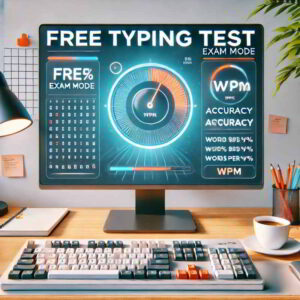
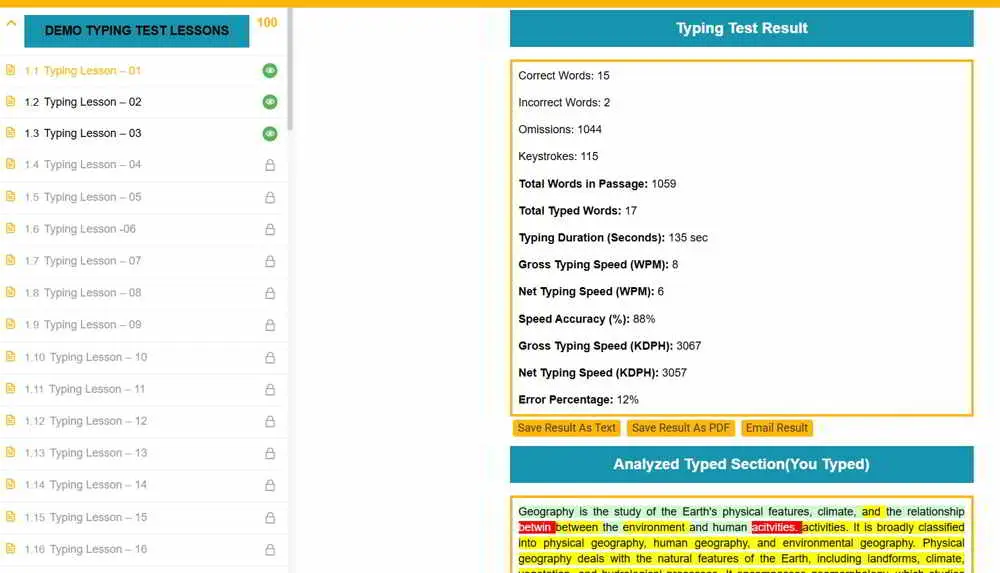
The primary focus of the course is the typing speed test, where users can check their Words Per Minute (WPM) and Accuracy Rate. The test provides real-time analysis and historical performance tracking, helping users monitor their improvement over time.
2. Customized Practice Sessions
Users can tailor their typing practice based on their requirements:
Select time duration (1 minute, 5 minutes, 10 minutes, etc.).
Choose from different text categories such as legal, medical, general, or programming content.
Adjust difficulty levels from beginner to advanced.
Receive instant feedback with suggestions for improvement.
3. Typing Lessons & Exercises
The course offers structured typing lessons to gradually build speed and accuracy. Key lessons include:
Finger placement techniques to improve hand coordination.
Daily typing drills to enhance muscle memory.
Typing without looking at the keyboard to develop touch typing skills.
4. Multilingual Typing Support
For users aiming to improve their typing speed in multiple languages, the Stenoguru Typing Speed Test Course provides:
English Typing Lessons for beginners to professionals.
Hindi Typing Practice using Kruti Dev and Mangal fonts.
Marathi Typing Training to master typing in Devanagari script.
5. Advanced Typing Analytics
Understanding performance metrics is crucial for improvement. The course offers detailed analytics, including:
Typing speed trends over time.
Common mistakes and accuracy reports.
Keypress frequency analysis to identify weak areas.
6. Typing Speed Certification
Upon successful completion of the typing course, users receive a typing speed certification. This is particularly useful for individuals applying for jobs requiring specific typing speed qualifications, such as government stenographer exams, data entry jobs, and transcription roles.
7. Mobile & Desktop Compatibility
The Stenoguru Typing Speed Test Course is accessible on both desktop and mobile platforms. Users can practice typing on the go, ensuring flexibility and convenience.
Benefits of Taking the Stenoguru Typing Speed Test Course
Boost Productivity: Improve typing efficiency, which translates into faster document processing and increased workplace productivity.
Enhance Accuracy: Minimize errors with structured exercises and real-time feedback.
Prepare for Competitive Exams: Many government exams require a specific typing speed; this course helps candidates meet those requirements.
Improve Job Prospects: High typing speed is a valuable skill for data entry operators, transcriptionists, journalists, and content writers.
Flexible Learning: Practice at your own pace with customized sessions and adaptive learning methods.
Who Should Enroll in This Course?
Students preparing for competitive exams (SSC CGL, CHSL, IBPS, RRB, etc.).
Aspiring stenographers and data entry operators.
Freelancers and content writers looking to improve their typing efficiency.
Transcription professionals requiring high accuracy levels.
Anyone interested in mastering touch typing skills.
How to Get Started with the Stenoguru Typing Speed Test Course?
Getting started with the Stenoguru Typing Speed Test Course is simple:
Visit the official website: Navigate to Stenoguru.com to access the typing test platform.
Create an account: Sign up for free to track your typing progress and access basic features.
Choose your typing level: Start with beginner exercises or directly take a speed test to gauge your skill level.
Practice regularly: Utilize structured lessons and real-time tests to improve gradually.
Monitor your progress: Review your analytics and focus on weak areas to enhance speed and accuracy.
Get certified: Complete the required tests to earn your typing speed certificate.
Conclusion
The Stenoguru Typing Speed Test Course is a comprehensive and user-friendly platform designed to help users enhance their typing skills efficiently. Whether you are preparing for competitive exams or looking to boost your productivity in professional settings, this course provides everything you need to master fast and accurate typing. With structured lessons, real-time analytics, and multilingual support, the course ensures that users achieve their desired typing speed effectively.

You may also like
Six Weeks Before the Typing Test, the Diagrams Stop Working
It is half past nine at a coaching centre above a stationery shop, and an instructor is holding a phone above a keyboard, filming her own hands for the fourth time. The overhead light throws her wrist shadow across the number row. She deletes it and tries again. She has a wall chart that shows the same thing. It has shown the same thing for eleven years. The problem is that the chart shows finger positions, and what her students keep getting wrong is finger travel, which a chart cannot show at all. This is the gap that exam-prep content keeps falling into, and it has nothing to do with the quality of the teaching material. It is a format mismatch, and it marks out the one teaching job that image to video does better than a camera inside a coaching centre. Typing and shorthand are motion skills. Almost everything used to teach them is still. That mismatch is the whole case for image to video in exam prep, and it is a narrower case than the marketing suggests. Week One: Where Static Teaching Material Runs Out Ask any shorthand teacher what students get wrong in the first month and you will hear a version of the same answer: not the outline, the stroke. “They can copy the shape,” one instructor put it. “They copy it the way you copy a drawing, one bit at a time. Then in dictation they have to make the same shape in one movement and it falls apart, because nobody ever showed them the movement. They learned a picture of the answer.” Shorthand has its own version of this, and it is worse. An outline on a page is a finished shape, but the examiner is not marking the shape. The stroke has a direction, a pressure change partway through, and a place where the pen lifts or does not. A printed outline records none of that. It records the residue. “I can look at a student’s page and tell you they drew it instead of writing it,” a second teacher said. “The line is even. Nobody who wrote that outline at speed produces an even line.” The same problem shows up in typing papers. A chart marks which finger owns which key. It says nothing about the path between them, the return to the home row, or the fact that speed comes from not looking. Students absorb the map and fail the journey. Filming it yourself is the obvious fix and it is harder than it sounds. Overhead phone shots fight the ceiling light, the hands in frame are the teacher’s rather than the learner’s, and re-shooting a clip every time the syllabus changes a detail is a job nobody has time for at exam season. The Evening a Keyboard Chart Started Moving The workaround that has been spreading through small coaching setups this year is to stop filming and start animating what they already have. Take the chart. Take the single frame that shows the hand at rest on the home row. Put motion on a still that was never meant to move and you get four seconds of the thing the chart could never say: the index finger leaves, reaches, returns. Four seconds of hand travel appear that no photographer was present to capture. Nobody is claiming this is footage of a real hand. It is a diagram that moves, which is exactly what a diagram needed to be all along. The materials are already there. Eleven years of charts, posture photographs, shorthand outline sheets, screenshots of a practice interface. All of it static, all of it the raw material for a few evenings of image to video work instead of a shoot. Three Weeks In: What the Students Actually Asked For Not more content. Shorter content, and slower. The requests that came back were specific in a way that surprised the instructor: show the wrist, not the whole hand. Show it at half speed. Show the same stroke twice. One student asked for a version with no keyboard visible at all, just the finger path in the air, which turned out to be the most useful clip of the set. That feedback maps onto image to video settings rather than onto better prompts. Duration short enough that a student can loop it without thinking. Vertical shape, because every one of them is watching on a phone between shifts. Low resolution, because the data plan is the real constraint in a lot of these towns and a crisp file nobody can load is worth nothing. “They do not want a lecture,” she said. “They want the two seconds they keep getting wrong, on repeat.” Day Four: What Should Never Be Animated The first evening produced eleven clips and four of them were worse than the pictures they came from. That is a useful ratio to know about in advance. Three categories turned out to be wrong by their nature. Posture reference photographs, where the whole instructional point is a held position, lose their meaning the moment anything drifts; a still spine is the lesson. Screenshots of an exam interface should stay screenshots, because a candidate needs to recognise the actual screen and any invented motion introduces a detail that is not there on the day. And anything whose content is text to be read is a poor candidate, since a reader who is decoding words cannot also track movement, and the movement wins. There is a fourth case that is less obvious. If a still already implies its own motion clearly enough that students describe it correctly when asked, animating it adds nothing. The test the teachers settled on costs nothing and takes ten seconds: show the picture and ask the room what happens next. If the room answers correctly, leave it alone. Running that filter first changes the economics of the whole exercise. A syllabus that looked like forty candidates for image to video came down to nine, and nine is an evening rather than a project. The teachers who gave up partway through were, without exception, the ones who tried to convert everything. Before You Record Anything, Repair What You Are Feeding In Most first attempts fail right here, and ten minutes on what Seedance needs from an opening frame will save you an evening. The rule that emerged from a lot of wasted drafts: crop to the thing that must move. A full-page chart with four diagrams on it gives the model four subjects and no instruction about which one matters, and you get a result where everything drifts slightly and nothing teaches. Crop to one hand. One outline. One key group. Shape and file size are the next two decisions, and both are dictated by where the clip will be watched rather than by what looks best on a laptop. These students are on phones, often on metered connections, frequently between shifts. A vertical or square crop and a deliberately small file will be watched; a wide, heavy file will be promised and skipped. The teachers settled on the smallest output that still made the movement legible, and legibility here means the hand fills the frame, not that the pixels are plentiful. Contrast matters more than resolution here. A photocopied chart with grey-on-grey lines produces mush. A clean redraw, or the original file rather than a scan of a print of a scan, changes the output more than any change of model will. And when the clip needs to carry a rhythm — dictation pace, metronome speed for typing drills — the MiniMax H3 page’s guidance on visual continuity is the relevant reading, because reference material there can include sound alongside the image, with the caveat that audio cannot stand alone as the only input. Six Weeks Out: Sequencing the Set Against the Calendar Making the clips is an evening. Deciding the order is the part that actually needs a teacher. The sequence that worked ran backwards from the exam rather than forwards from the syllabus. Six weeks out, the clips that matter are the foundational movements, because a habit corrected at six weeks has time to become automatic and a habit corrected at two weeks just becomes another thing to think about under pressure. Home-row return, pen lift, the reset between dictation passages. Four weeks out, the emphasis moves to the specific outlines and key groups that this particular cohort keeps missing, which is information the teacher already has from marking and does not need to guess. Inside the final fortnight, almost nothing new should be introduced. The clips still in circulation at that point should be ones the students have already seen, because familiarity is doing the work by then, not instruction. One teacher put a hard stop on new material at fourteen days and said she would not move it. None of that sequencing is a property of the tool. It is ordinary teaching judgement, and it is the half of the job that image to video does not touch. That calendar logic matters more than the production quality. A perfect clip at the wrong week is a distraction with good lighting. The Week of the Mock Test The clips did not replace the charts. That was the surprise. What happened instead is that the charts came back into use, because students who had seen the movement could now read the static diagram properly. The clip taught the motion; the chart became the reference you check afterwards. One instructor described the animated set as “the thing that makes the wall chart make sense”, which is a more modest claim than the technology usually gets and probably a more accurate one. Cost, for what it is worth, was an evening of an instructor’s time and a set of files she already owned. …

The Hidden Impact of Window Cleaning in Spokane, WA
Spokane is known for its changing seasons—dusty summers, rainy springs, and winters that leave behind layers of grime. While most homeowners focus on interior cleaning or landscaping, one often-overlooked aspect of property care is window maintenance. Clean windows aren’t just …